Emergency: If your child's seizure lasts more than 5 minutes, or they do not regain consciousness, call 911 immediately. For all first seizures, call our office at 713-589-7020 for prompt evaluation.
Expert Pediatric Care
Childhood Seizures & Epilepsy — What Families Need to Know
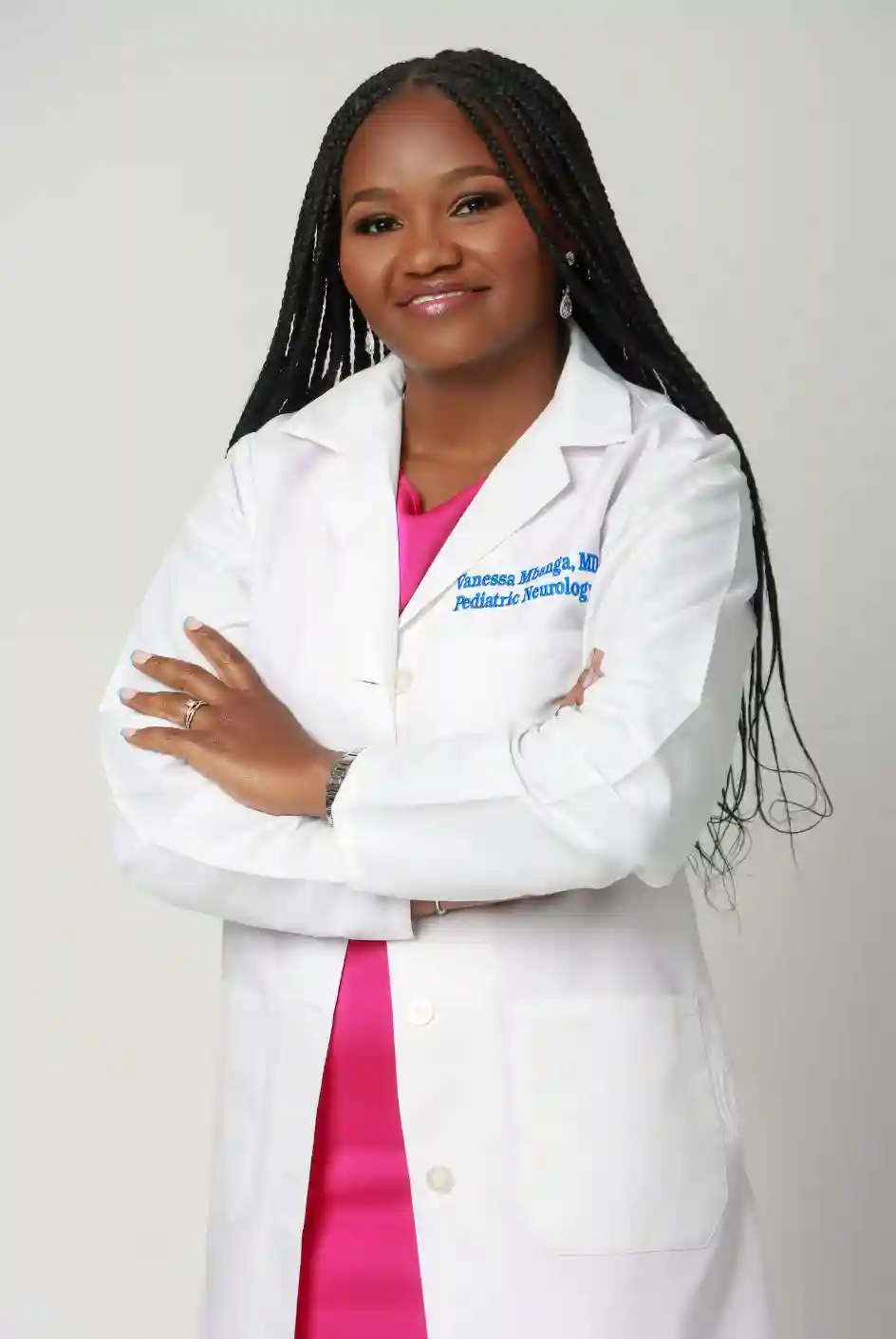
Watching a child have a seizure is one of the most frightening experiences a parent can face. At Family Neurology, Dr. Vanessa Mbanga, MD — a fellowship-trained epileptologist — specializes in evaluating and treating seizures in children of all ages, from newborns through teenagers.
Epilepsy is one of the most common neurological conditions in children, affecting approximately 1 in 26 people at some point in their lifetime. With accurate diagnosis — including EEG brain testing — and the right treatment, about 70% of children with epilepsy can become seizure-free.
Dr. Mbanga completed her epilepsy fellowship at Baylor College of Medicine with advanced EEG training at Texas Children's Hospital. She is one of the only fellowship-trained epileptologists in private practice in SE Houston — and she treats patients of all ages, so your child will never need to find a new specialist as they grow up.
Warning Signs of Seizures in Children
Seizures do not always look like the dramatic shaking most people picture. Watch for these signs:
Staring spells
Brief episodes of "blanking out" or unresponsiveness
Jerking movements
Rhythmic twitching of arms, legs, or face
Sudden falls
Unexplained drops to the ground without tripping
Unresponsiveness
Child cannot be spoken to or roused during the episode
Fever + shaking
Febrile seizures — common in children under 5
Confusion after
Prolonged sleepiness or confusion following an episode
Types of Childhood Seizures We Treat
- Febrile seizures (fever-related)
- Absence seizures (staring spells)
- Generalized tonic-clonic (grand mal) seizures
- Focal (partial) seizures
- Infantile spasms
- Neonatal seizures
- Drug-resistant / refractory epilepsy
- Autoimmune epilepsy
- Lennox-Gastaut syndrome
- Dravet syndrome
How We Diagnose Childhood Epilepsy
Accurate diagnosis starts with understanding exactly what type of seizure your child is having. Dr. Mbanga uses a structured approach:
-
1
Neurological examination & history
Detailed review of your child's seizure episodes, development, family history, and any triggering factors.
-
2
EEG brain testing — interpreted by our epileptologist
In-office EEG records your child's brain electrical activity. All EEGs at Family Neurology are read personally by Dr. Mbanga — fellowship-trained in EEG interpretation.
-
3
Personalized treatment plan
Medication selection tailored to your child's seizure type, age, and lifestyle. Clear guidance on seizure safety, school accommodations, and what to watch for.
Frequently Asked Questions
What should I do if my child has a seizure?
Stay calm. Lay your child on their side (recovery position), clear the area of hard objects, and time the seizure. Do not put anything in their mouth.
Call 911 if: the seizure lasts more than 5 minutes, your child does not regain consciousness, or it is their first seizure. After the episode, call 713-589-7020 for prompt evaluation. Learn more about our seizure specialist →
What is the difference between febrile seizures and epilepsy?
Febrile seizures are triggered by fever in children between 6 months and 5 years of age. They are usually isolated events — most children who have febrile seizures do not develop epilepsy. Epilepsy involves recurrent, unprovoked seizures not related to fever. Any febrile seizure with concerning features (lasting more than 5 minutes, affecting only one side of the body, or followed by lasting weakness) warrants immediate evaluation.
How is childhood epilepsy diagnosed?
Diagnosis involves a thorough medical history, neurological examination, and an EEG (electroencephalogram) to record brain electrical activity. An MRI may also be ordered to look for structural causes. At Family Neurology, all EEGs are personally interpreted by Dr. Vanessa Mbanga — a fellowship-trained epileptologist.
Can children outgrow epilepsy?
Yes. Many children with certain epilepsy syndromes — including childhood absence epilepsy and benign rolandic epilepsy — achieve seizure freedom as they mature. Overall, about 70% of children with epilepsy can become seizure-free with appropriate treatment. Dr. Mbanga will discuss your child's specific syndrome and long-term outlook at your appointment.
Are childhood seizures dangerous?
Most brief seizures (under 2–3 minutes) are not immediately life-threatening. However, all seizures require evaluation to determine the cause and reduce risk of recurrence. Status epilepticus (a seizure lasting more than 5 minutes) is a medical emergency that requires immediate treatment. Regular follow-up with a specialist helps minimize risk and optimize quality of life.
Your Child's Specialist
Dr. Vanessa Mbanga, MD
Epileptologist & Pediatric Neurologist
Baylor Epilepsy Fellowship · Texas Children's Hospital
Also on staff: Dr. Lisa Nassif Wright, MD — adult & child neurologist who also treats seizures in children and adults.